
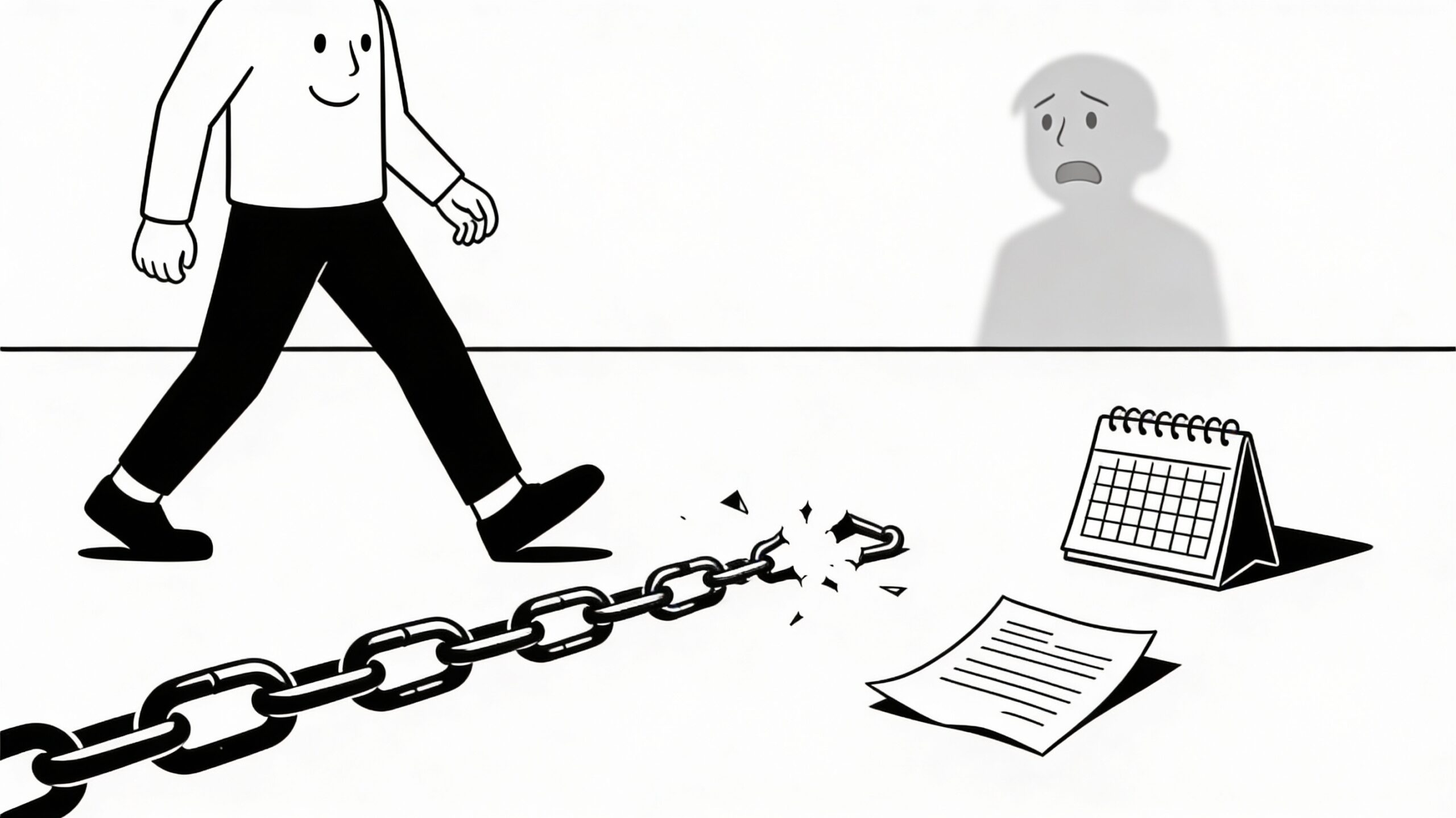
We all make commitments—big and small. But how often do we really keep them? Many times, people fail to fulfill their promises, not because they are bad or careless, but because something inside them resists. Strangely, they may even feel a secret sense of victory in breaking a commitment.
Take a simple example: being on time. If someone insists that you must arrive at 9 a.m. sharp, it can suddenly feel like slavery. Yet, the same person may wake up early and reach at 8:30 with tremendous energy—if only they are given the freedom to choose. The difference lies not in the task, but in whether they feel bound or free.
For many, especially the young, commitments feel like chains. Keeping a promise feels heavy, while breaking it gives an illusion of freedom. It’s almost as if by saying “I won’t do it”, they reclaim their independence. Some even take pride in keeping things pending, as though delay itself proves that they are the masters of their time.
But this tendency has consequences. Some people lose opportunities, wealth, and even respect because they refuse to align with systems that demand discipline. Ironically, they look at those who work hard, honor their word, and achieve success, and dismiss them as “fools” who are unnecessarily burdening themselves. At the same time, they are not shy to lean on these “fools” for help and support.
They define a kingly life as doing—or not doing—whatever they wish. Yet even this definition creates a new commitment, so they may not live it consistently.
Here is the paradox: the same people who resist commitment can work tirelessly if they believe they are doing so out of freedom. For example, you may see someone refuse to follow office rules, yet stay awake all night creating art, writing code, or pursuing a passion project—simply because they choose to do it.
This is why philosophies that celebrate enjoyment and freedom attract them. “Life is for enjoyment,” they say, “and commitments are traps.” Sometimes, clever leaders and thinkers use this tendency to guide people toward service—preaching “non-committed” action, where the work looks like freedom rather than duty. And surprisingly, people can work day and night under such guidance.
Have you met such people? Or perhaps catch yourself behaving like this sometimes? If yes, don’t worry—it’s part of being human. The important thing is to notice this tendency, smile at it, and slowly learn how to balance freedom with responsibility.
Because real freedom is not just the right to say no, but also the strength to say yes—and to mean it.
• Ravi 🤗👌

0 Comments